
Picture a whale. Now picture it with legs.
That’s the moment that stops visitors in their tracks at Wadi El Hitan, the Valley of the Whales, in Egypt’s Fayoum desert. Here, in the middle of the Sahara, hundreds of fossilized whale skeletons lie exactly where they died around 40 million years ago, when this whole area was the floor of an ancient sea.
Why Wadi El Hitan is such a big deal
Scientists have known for a long time that whales evolved from land mammals. Wadi El Hitan is where you can actually see that transition. The valley holds the remains of hundreds of early whales, including Basilosaurus, a sea predator that could grow to about 60 feet long. Some skeletons still show small hind legs, complete with feet and toes. These were whales that had already gone fully aquatic but hadn’t lost their legs yet.
That’s why UNESCO added the site to its World Heritage List in 2005. It’s Egypt’s only natural World Heritage Site, and one of the most important fossil sites on Earth for understanding evolution.
The discoveries keep coming
This isn’t a closed chapter. Paleontologists are still working in the area. In 2023, an Egyptian team announced Tutcetus rayanensis, a small early whale about 8 feet long, found in the neighboring Wadi El Rayan protected area and named partly after Tutankhamun. It’s one of the oldest fully aquatic whales known from Africa. Every season adds new pieces to the story.
What you’ll see on your visit
- The open-air fossil trail: a marked sandy path that takes you past whale skeletons resting in the rock, along with fossil shells, shark teeth and mangrove roots.
- Wind-carved rock formations: the sandstone around the valley looks like mushrooms, castles and sphinxes. It’s spectacular in late-afternoon light.
- The Fossil & Climate Change Museum: a cool, shaded museum built into the landscape, centered on a complete Basilosaurus skeleton. A great break from the sun, and kids love it.
How to get to Wadi El Hitan
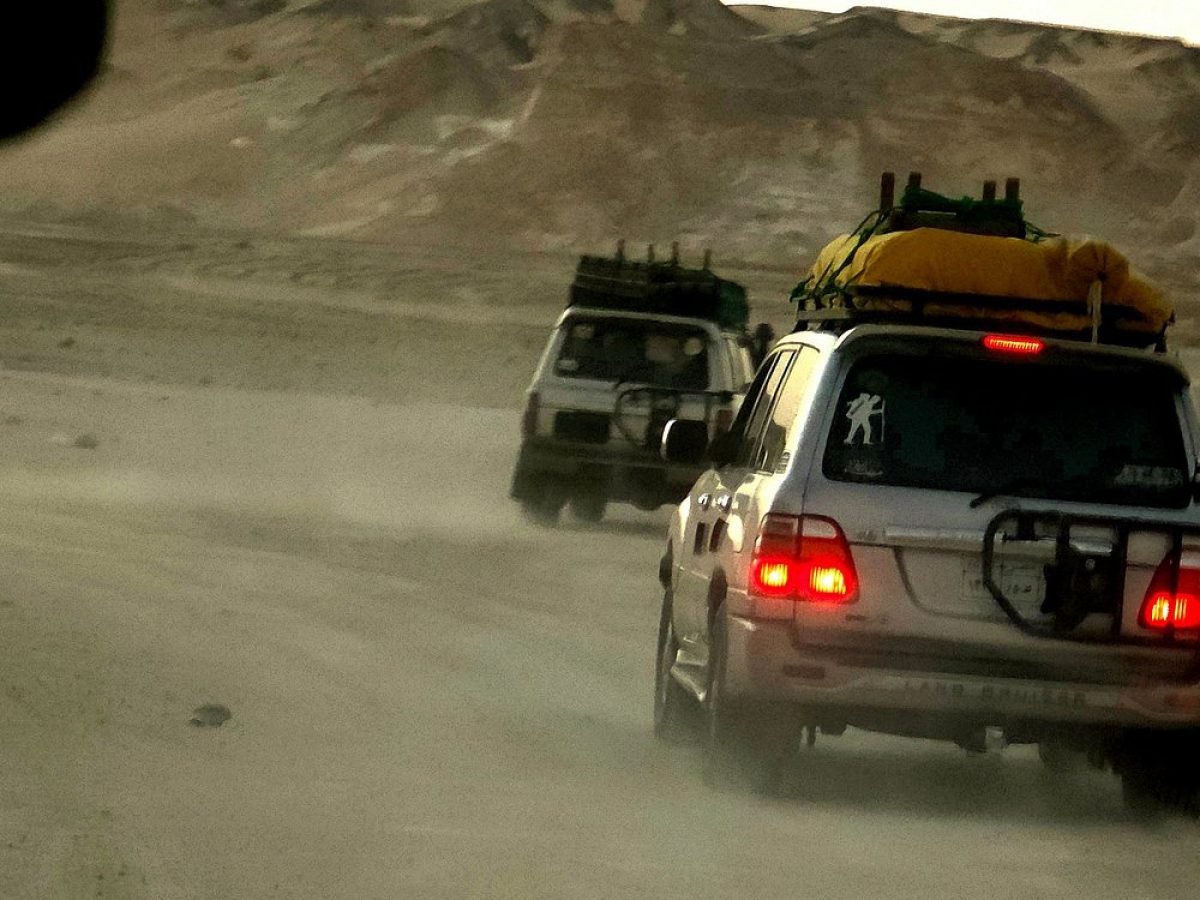
The valley is about 3 to 3.5 hours from central Cairo. The final stretch is a desert track inside the protected area. Most visitors come as part of a private Fayoum day tour that combines the valley with the Wadi El Rayan waterfalls and Magic Lake, so you get the whole region in one day without planning the logistics yourself.
Tips for visiting
- Go in the cooler months. October to April is ideal. The trail has very little shade.
- Wear real shoes. Sandals and sand don’t mix.
- Leave everything as you find it. Touching or removing fossils is strictly prohibited, and the rangers take it seriously.
- Bring water and sunscreen. Your guide will have bottled water in the car, but carry your own on the trail.
- Ask about the stars. Wadi El Hitan has become one of Egypt’s favorite stargazing spots. If you’re staying overnight in Fayoum, the night sky here is unforgettable.
Frequently asked questions
How old are the fossils at Wadi El Hitan?
Most of the whale fossils date to roughly 37 to 40 million years ago, in the Eocene epoch.
How long does the visit take?
Allow about 1.5 to 2 hours for the trail and the museum.
Is Wadi El Hitan suitable for children?
Absolutely. The trail is flat and easy, and seeing a whale with legs is pure magic for curious kids.
See it for yourself
Few places on Earth let you stand next to evolution in progress. Book the Ramses Egypt private Fayoum day trip and walk the Valley of the Whales with a guide who brings every skeleton to life.
Written by the Ramses Egypt team in Giza, a few minutes from the Pyramids. We run private tours only, with your own Egyptologist guide, private air-conditioned car and hotel pickup. Plan your trip with us on WhatsApp.